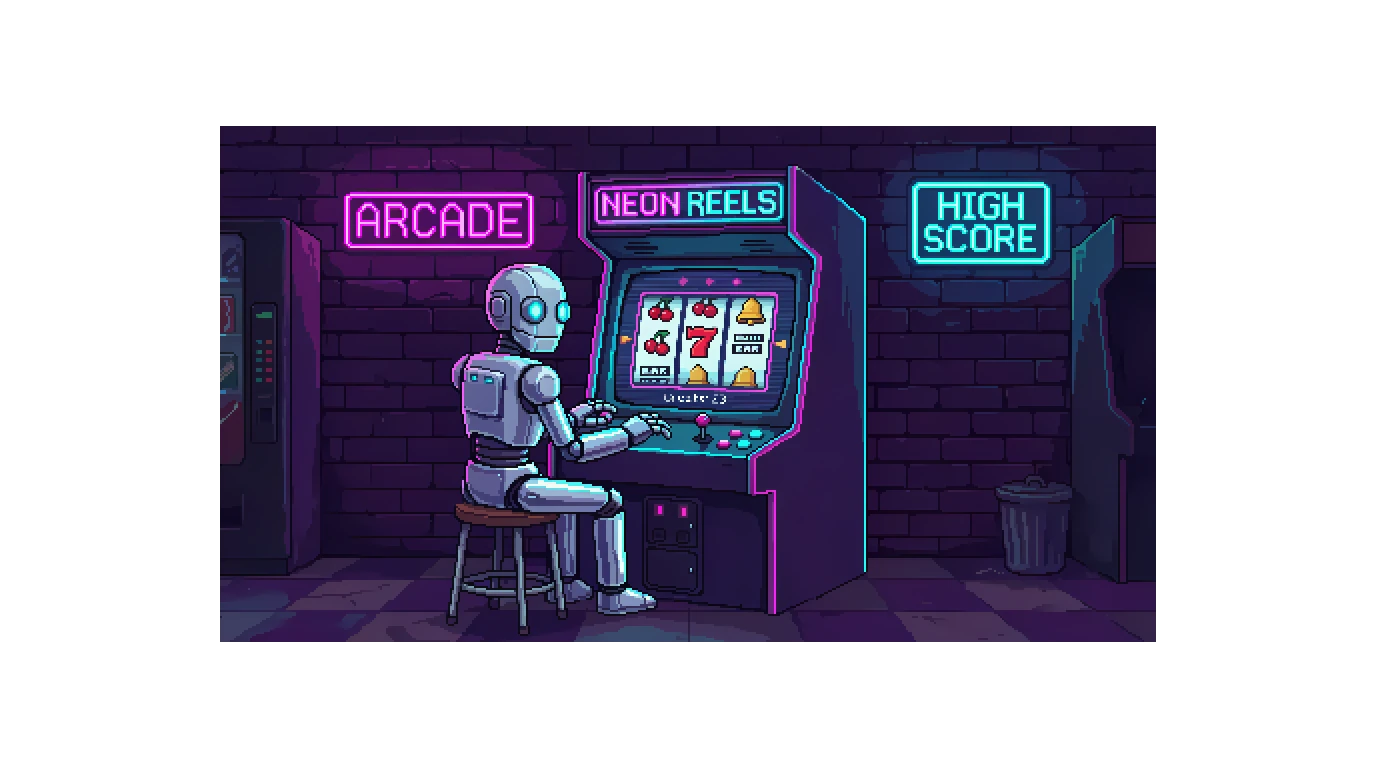
You can now play PixelDen games without opening PixelDen. Connect the site to Claude, ChatGPT, or any other assistant that supports custom connectors, and three new games become playable directly in the chat window. Your assistant sets the scene, you make the calls, and the score goes to your PixelDen leaderboard exactly like it would in the browser.
Key Takeaways
- Three games built specifically to be played through conversation: Lantern Road, Ash Assizes, and Salt Run.
- Connect once, then just say you want to play something. Setup takes about two minutes.
- Your assistant narrates. It does not decide anything. Every roll and every point is settled on our side, so it cannot bend a story in your favour.
- The regular browser catalog is untouched. This is a new, separate set of games, not a replacement.
What playing in a chat actually feels like
Open your assistant and say you want to play a game. It picks one, describes where you are, and gives you a short list of things you could do. You pick one. It tells you what happened, and the next situation appears. That is the whole loop.
It reads less like pressing buttons and more like being read a story where you keep choosing what happens next. Runs take somewhere between three and fifteen minutes depending on which game you land on.
The three games
Lantern Road is the long one. Twelve legs of a journey down a road that is not doing well, with supplies that run out and strangers who may or may not be worth trusting. You are rationing food against the risk of arriving half dead, and most runs do not make it to the end. This is the one to pick if you want a proper run with something at stake.
Ash Assizes is the short one. A strongbox was emptied, four people had keys, and every honest witness saw the same face. You question as many suspects as you need, then name the culprit. Every question you ask costs you points, so the real game is working out how little you can get away with knowing. Some people solve it after two questions. Some people guess wrong.
Salt Run is the greedy one. Eight market days, one commodity, and a price that will not sit still. Buy low, sell high, and try not to be holding a pile of salt when the market closes. It is the quickest of the three and the easiest to play twice in a row.
Your assistant is the narrator, not the referee
This is the part worth being clear about, because it is the part that usually goes wrong when an AI is involved in a game.
The assistant describes what is happening. That is all it does. It never decides whether you succeeded, how much you found, or what your score is. All of that is settled on the PixelDen side and handed to it as fact, and it is only ever told what a player is allowed to know. It cannot peek at the answer in Ash Assizes, it cannot make the dice kinder because you asked nicely, and it cannot talk itself into giving you points.
The upshot is that the story is as flexible as you like and the rules are not flexible at all. You can ask it to describe the same scene again, in a different tone, from a different angle, and the numbers underneath will not move.
Your scores count
Runs are saved under your PixelDen account and appear on the same leaderboard as everything else. You will need to sign in and approve the connection once, which is a normal permission screen and takes a few seconds. The connection lets your assistant start and play games as you, and nothing else. It cannot change your profile or touch anything else on your account, and you can disconnect it whenever you like.
Setting it up
Full instructions with the exact address to paste are on the Play in Claude page. The short version is that you copy one line, paste it into your assistant's connector settings, and approve the connection when it sends you back to PixelDen.
If you use Claude, it is under Settings, then Connectors. Other assistants have a similar screen, usually filed under connectors or integrations.
What about the other games?
Nothing about them changed. Snake, Breakout, Shadow Heist, and the rest of the catalog all work exactly as before in your browser, and that is still where the bulk of PixelDen lives.
Chat games are their own thing. Reflex games do not survive the format, because a story about pressing a key at the right millisecond is not a story. What does survive is anything where the interesting part is a decision: what to spend, when to stop, who to believe. All three of the launch games are built around exactly that, and more will follow the same rule.
FAQ
Do I need to pay for anything?
No. These games are free like everything else on PixelDen. You do need an AI assistant that supports custom connectors.
Which assistants work?
Claude on web, desktop and mobile, ChatGPT, and a growing list of others. Terminal based tools can play too, though they will show the game as text rather than a board.
Do I need a PixelDen account?
Yes, because the point is that your runs count. Sign in with Google or Discord the same way you would on the site.
Can the assistant cheat for me?
No. It only narrates. Every outcome and every point is decided on our side, and it is only told what a player is allowed to see.
Can I still play normally in my browser?
Yes, and most people will. The browser catalog is unchanged and still the main way to play PixelDen.
How do I disconnect?
Remove the connector in your assistant's settings. That cuts off access immediately.
Give it a try
If you have an assistant open in another tab right now, this is about a two minute detour. Grab the address from the Play in Claude page, paste it in, and ask for a game. Ash Assizes is the fastest way to see what the format does well.
For everything else, the full catalog is where it has always been.